

If your bite feels off or your teeth don’t line up the way they should, you are not alone. Many people in Woodbridge, Virginia, deal with bite issues that go far beyond appearance. An overbite, underbite, or crossbite can cause jaw pain, uneven wear on your teeth, and even trouble chewing. The good news is that modern orthodontics has come a long way. Today, Invisalign for bite correction is a proven, discreet option that thousands of patients use every year — including right here in our community.
Still, many patients wonder: “Can clear aligners really fix my bite, or do I need metal braces?” It is a fair question, and the answer depends on your specific situation. At Lake Ridge Orthodontics, we hear this concern at nearly every consultation. In this blog, we will break down each bite issue, explain how Invisalign works to correct it, and help you understand what to expect from treatment. Whether you are an adult, a teen, or a parent exploring options for your child, this guide is for you.
What Are Overbite, Underbite, and Crossbite?
Before we discuss treatment, it helps to understand what each bite problem actually means. These are not just cosmetic concerns — they are structural issues that affect how your jaw functions day to day.
Overbite
An overbite occurs when your upper front teeth significantly overlap your lower front teeth. A small amount of overlap is normal and even healthy. However, when the overlap is too deep, it can lead to worn-down lower teeth, jaw tension, and discomfort. Many patients describe it as their upper teeth “covering” the lower ones completely. Invisalign treatment works by gradually repositioning both the upper and lower teeth so that the bite becomes balanced and functional.
Underbite
An underbite is essentially the opposite of an overbite. Here, the lower front teeth sit in front of the upper front teeth when you close your mouth. This can make chewing difficult and may affect how you speak. Many patients feel self-conscious about their profile because of this alignment. So, can Invisalign fix underbite? The answer is yes — in many mild to moderate cases. Clear aligners can guide the lower teeth back and the upper teeth forward to create a healthier bite relationship. Severe skeletal underbites, however, may require additional treatment.
Crossbite
A crossbite happens when some of your upper teeth sit inside your lower teeth rather than outside. This can occur at the front of your mouth, at the sides, or in both areas. Left untreated, a crossbite can cause uneven jaw growth in younger patients, gum recession, and tooth wear. Clear aligners bite correction is particularly effective for crossbites because each aligner is custom-designed to move specific teeth into proper positions. Most patients are surprised by how much progress happens within the first few months.
How Does Invisalign Correct Bite Problems?
Invisalign uses a series of custom-made, removable clear aligners that gradually shift your teeth into their correct positions. Each set of aligners is worn for about one to two weeks before you move to the next set. Over time, this steady, gentle movement guides your teeth — and your bite — toward the desired outcome. Here is what makes the process effective for bite correction specifically:
- Precision attachments: Small tooth-colored buttons bonded to certain teeth help the aligners exert the right forces in the right directions.
- Custom aligner series: Every step is mapped out using 3D digital imaging, so your treatment is tailored specifically to your bite issue.
- Mandibular advancement features: For patients with overbites, special aligner wings can help bring the lower jaw forward over time.
- Controlled tooth movement: Unlike over-the-counter aligners, professional Invisalign treatment controls the timing and direction of every shift.
The result is a treatment plan that does far more than straighten teeth — it actively works to correct the underlying bite misalignment in a way that is comfortable, discreet, and effective.
Why Woodbridge Families Trust Lake Ridge Orthodontics for Bite Correction
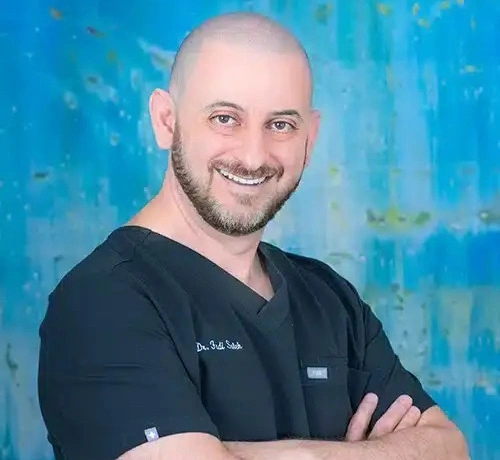
Choosing the right provider makes all the difference in your Invisalign journey. At Lake Ridge Orthodontics in Woodbridge, Virginia, our team is led by Dr. Fadi Saleh — a board-certified orthodontist with nearly two decades of experience helping patients achieve healthy, confident smiles. Since 2005, Dr. Saleh has dedicated his practice to staying at the forefront of orthodontic innovation, which is why he holds active board certification from the American Board of Orthodontics (ABO).
ABO board certification is not just a credential — it represents an orthodontist’s ongoing commitment to the highest standards of specialty practice and lifelong learning. For patients in Woodbridge, VA, this means you are receiving care from a provider who is not only highly trained but also dedicated to using the most advanced, evidence-based techniques available today.
Dr. Saleh received his dental education at the State University of New York (SUNY) and has since built a practice centered on personalized, compassionate care. He understands that no two patients are alike. Before recommending Invisalign or any other treatment, he takes the time to fully evaluate your bite, your goals, and your lifestyle. Whether you are dealing with a deep overbite, a mild underbite, or a stubborn crossbite, he will give you an honest, informed recommendation.
At Lake Ridge Orthodontics, we also use iTero digital scanning technology, which allows us to show you a virtual preview of your expected results before treatment even begins. There are no messy impressions, no guesswork — just a clear, accurate picture of what your smile can look like after treatment.
What to Expect During Your Invisalign Bite Correction Journey
Starting Invisalign at our Woodbridge, VA practice is straightforward. Here is a simple step-by-step overview of what the process looks like:
- Free consultation: Dr. Saleh reviews your bite, discusses your concerns, and determines whether Invisalign is the right fit for your needs.
- iTero scan: A quick, comfortable digital scan creates a precise 3D model of your teeth and bite.
- Custom treatment plan: Your personalized series of aligners is designed and fabricated specifically for your bite correction goals.
- Wearing your aligners: You will wear each set for 20 to 22 hours per day, removing them only for eating, drinking (anything other than water), and brushing.
- Progress checkups: Dr. Saleh monitors your progress at regular intervals to ensure your bite is shifting correctly.
- Retention: Once treatment is complete, retainers help hold your new bite in place so your results last.
Most patients find the process manageable and far less disruptive than they expected. Because the aligners are removable, you can eat your favorite foods throughout treatment — no dietary restrictions like those that come with traditional braces.
Invisalign Fits Your Lifestyle
Life in Woodbridge, Virginia, is active and social. From dining at local favorites along the Potomac Mills corridor to attending community events and youth sports, your smile is always on display. Many of our patients appreciate that Invisalign aligners are virtually invisible, which means you can go through treatment without anyone even knowing. Whether you are heading into a work meeting, attending a school event, or enjoying the local parks and trails with your family, your treatment works quietly in the background — no metal brackets, no wires, no self-consciousness.
Teens and adults alike find that this flexibility makes it much easier to stay consistent with treatment. And consistency, as Dr. Saleh often reminds patients, is the single most important factor in achieving great results.
A Real Patient Experience at Lake Ridge Orthodontics
One of the most rewarding parts of practicing orthodontics is seeing patients transform — not just their smiles, but their confidence. Yitayish Wolle, a patient at Lake Ridge Orthodontics, shared her experience after completing her treatment:
“I had such a great experience with my orthodontist and the whole team! From the beginning of my braces journey to the day they came off, everyone was always kind, patient, and professional. They made every visit comfortable and explained everything clearly. When I finally got my braces off, they even gave me popcorn and gum to celebrate — such a fun and thoughtful surprise after not being able to eat those for so long! It made the moment even more special. I’m so happy with my new smile and really grateful for all the care they gave me. I highly recommend this office to anyone thinking about getting braces. Thank you for making the whole experience so positive!” – Y. Wolle, Patient at Lake Ridge Orthodontics
Yitayish’s journey reflects exactly what we strive to create for every patient. She came to us looking for a solution and left with not just a corrected smile, but a truly positive experience at every step. From her first consultation through her final appointment, Dr. Saleh and the team ensured she felt informed, comfortable, and celebrated. The popcorn-and-gum celebration at the end? That is just one small way we honor every patient’s hard work and commitment. At Lake Ridge Orthodontics, you are never just another appointment — you are part of our community.
Is Invisalign the Right Choice for Your Bite Issue?
Invisalign is highly effective for mild to moderate bite problems, and in many cases, it can also address more significant issues when combined with the right treatment approach. That said, it is not a one-size-fits-all solution. Here is a general guide to help you understand whether Invisalign may work for your specific situation:
- Mild to moderate overbite: Invisalign overbite treatment is often very effective, especially when combined with mandibular advancement features.
- Mild to moderate underbite: Can Invisalign fix underbite? Yes — for dental underbites caused by tooth position, Invisalign works well. Skeletal underbites may need additional evaluation.
- Crossbite: Clear aligners bite correction is effective for most crossbite cases, including posterior and anterior crossbites.
- Severe skeletal issues: These may require a combination of orthodontic treatment and surgical consultation for the best long-term outcome.
The only way to know for certain whether Invisalign is right for you is to schedule a consultation with Dr. Saleh. He will evaluate your bite thoroughly and give you honest, personalized guidance — no pressure, no guesswork.
Take the First Step Toward a Healthier Bite
Bite problems are common, but they do not have to be permanent. Whether you are living with an overbite that causes jaw discomfort, an underbite that affects your confidence, or a crossbite that has gone unaddressed for years, Invisalign may be the solution you have been looking for. At Lake Ridge Orthodontics, we are proud to offer expert Invisalign care to the Woodbridge community and surrounding areas. Dr. Saleh and our dedicated team are here to guide you through every stage of treatment — from your very first scan to your final beautiful smile.
Your smile is worth investing in. And with a board-certified orthodontist like Dr. Saleh on your side, you can feel confident that you are in the best possible hands. We invite you to take that first step today.
Frequently Asked Questions
Can Invisalign really fix a deep overbite, or do I need braces?
Yes, Invisalign overbite treatment is a clinically validated approach for correcting deep overbites in many patients. It works through precise tooth movement and mandibular advancement features that gradually guide the lower jaw into a more balanced position. Mild to moderate overbites respond very well to Invisalign alone, while severe cases may benefit from a combined approach that Dr. Saleh will discuss during your consultation.
Can Invisalign fix an underbite in adults, or is it only effective for teens?
Absolutely — Invisalign can fix underbites in adults quite effectively, especially when the issue is caused by tooth position rather than jaw structure. Invisalign gradually repositions both arches to create a more balanced bite, and adults respond well to this consistent, controlled force. For skeletal underbites, Dr. Saleh may recommend a more comprehensive treatment plan tailored to your specific needs.
How long does Invisalign take to correct a crossbite?
Most patients undergoing clear aligner bite correction for a crossbite can expect treatment to last anywhere from 12 to 24 months, depending on case complexity. Mild crossbites involving just one or two teeth can sometimes resolve in as little as 6 to 12 months. Wearing your aligners 20 to 22 hours per day is the single most important factor in staying on schedule.
Is Invisalign painful for bite correction?
Most patients describe Invisalign as significantly more comfortable than traditional metal braces, though mild soreness during the first few days of a new tray is normal. This discomfort is simply a sign that the aligners are actively moving your teeth and typically fades within two to three days. Unlike braces, Invisalign aligners are made from smooth plastic, so there are no brackets or wires to irritate your cheeks or gums.
What happens if my bite issue is too severe for Invisalign?
If your bite issue involves significant skeletal discrepancies, Dr. Saleh will be fully transparent about your options and will never recommend a treatment that does not suit your needs. He may suggest combining Invisalign with additional orthodontic appliances or, in complex cases, a referral to an oral surgeon for evaluation. The vast majority of patients at our Woodbridge, VA practice are good candidates for Invisalign or traditional braces.
Will I need retainers after Invisalign bite correction treatment?
Yes, retainers are an essential part of protecting your results after Invisalign treatment. Without them, teeth have a natural tendency to drift back toward their original positions. Dr. Saleh will discuss your retention options near the end of treatment, whether that is a fixed retainer or a removable one worn nightly.